Capture
An idea or a bug becomes a card in seconds
 byoi
byoiIdeas and bugs become cards. Cards become complete instructions, scoped with AI, gated by your review. Any agent executes them and reports back to the board. Everything lives as Markdown in your Git
100% free, no credit card. Your Git, your AI keys
Works with Codex, Claude Code, Cursor, Copilot, Gemini CLI and any other repo-aware agent, no native integration required
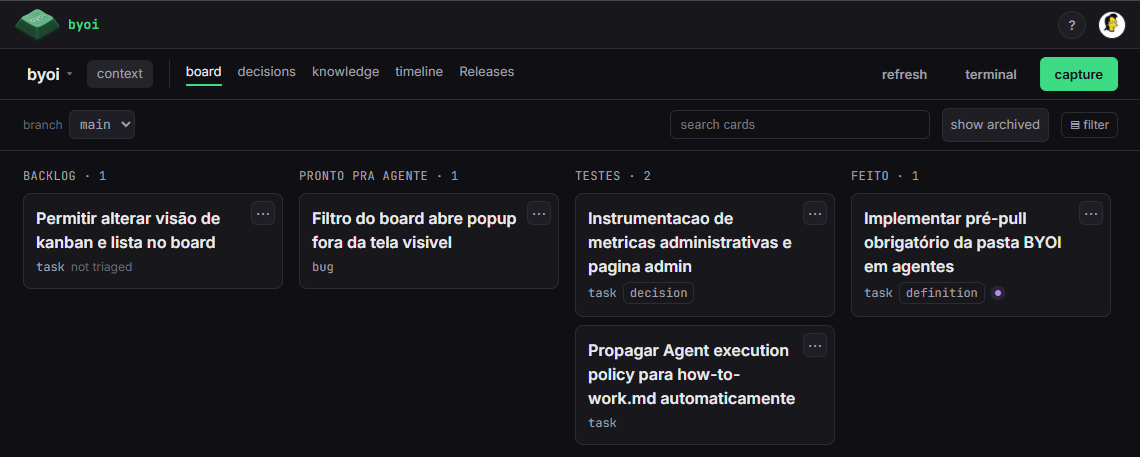
An idea or a bug becomes a card in seconds
AI fills scope, criteria and a ready prompt
You approve, and a gate flags what is not ready
Any coding agent runs the card under your rules
The board keeps the result and the decisions
Why not just an AGENTS.md and your harness's memory? Because a harness reads the repo. It finds what is near the task. It cannot know what should be built next, in what order, under which constraints, or whether a task is ready to leave
Your AGENTS.md does not go away. It gains a source: the board maintains the rules, context and decisions your agents read
Every screen below is a real card from the byoi repo. The loop in six moves, with the product on screen
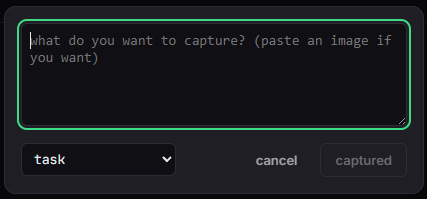
Board, terminal or a public feedback link. Text is enough and a screenshot works too. Nothing else is required for the card to exist
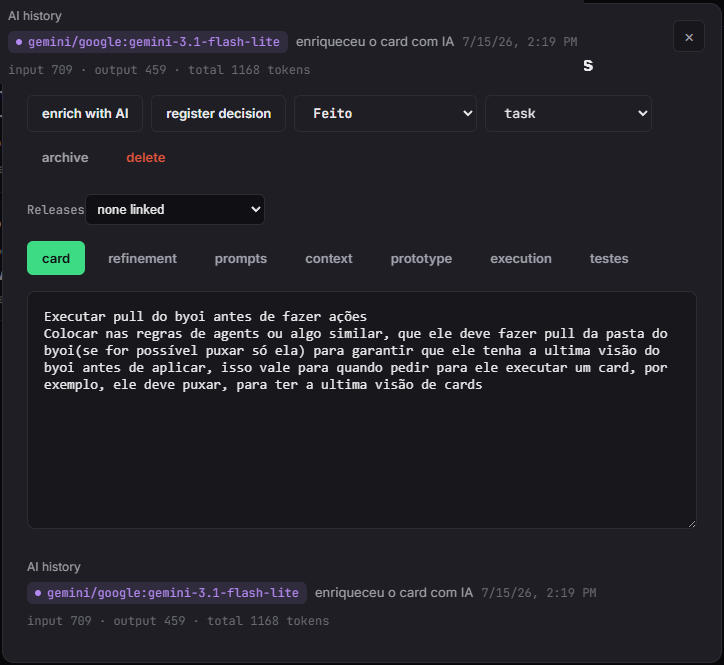
One click asks your model to fill scope, criteria and missing detail. Every AI touch is logged on the card: which model, which action, how many tokens
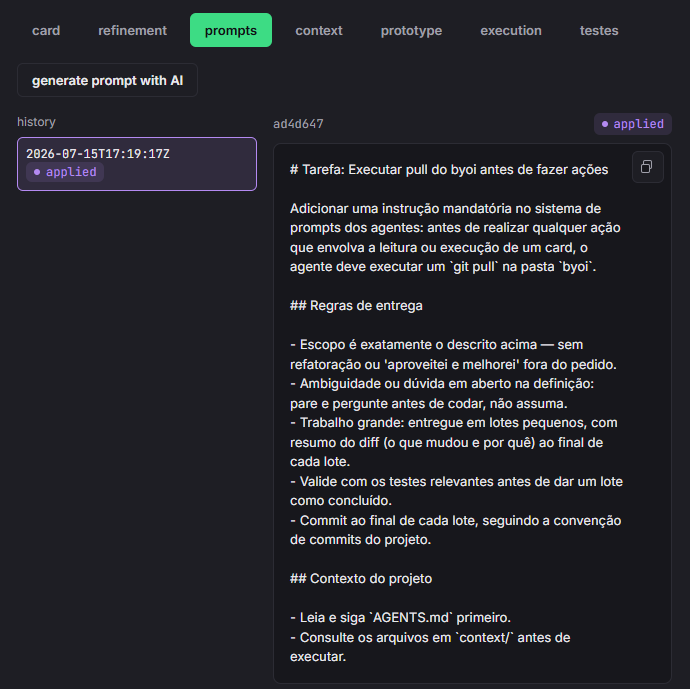
The card compiles into one complete instruction: task, delivery rules, project context. You read it before any agent does
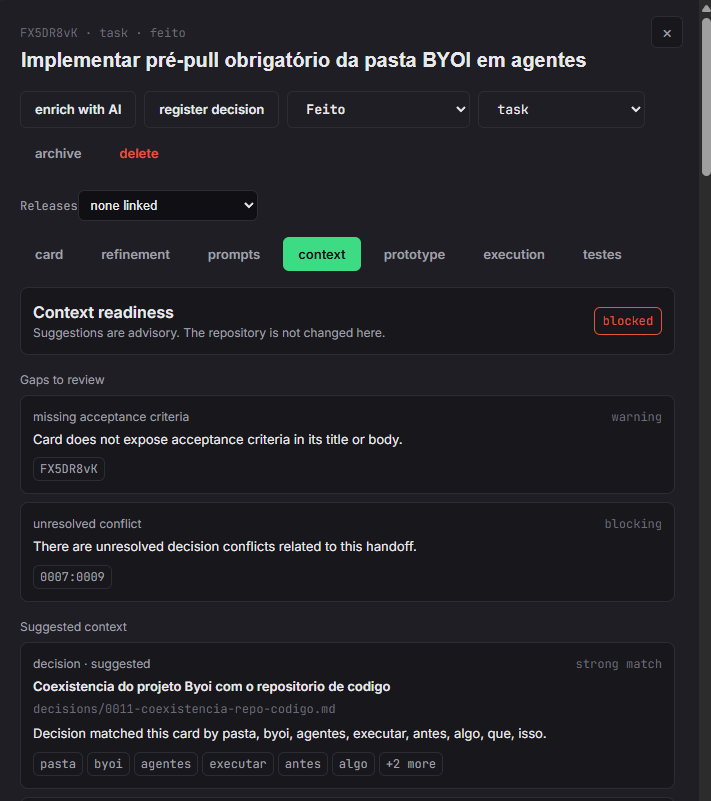
Before work leaves the board, Byoi flags missing acceptance criteria and conflicts with active decisions. Blockers show up here, not halfway through execution
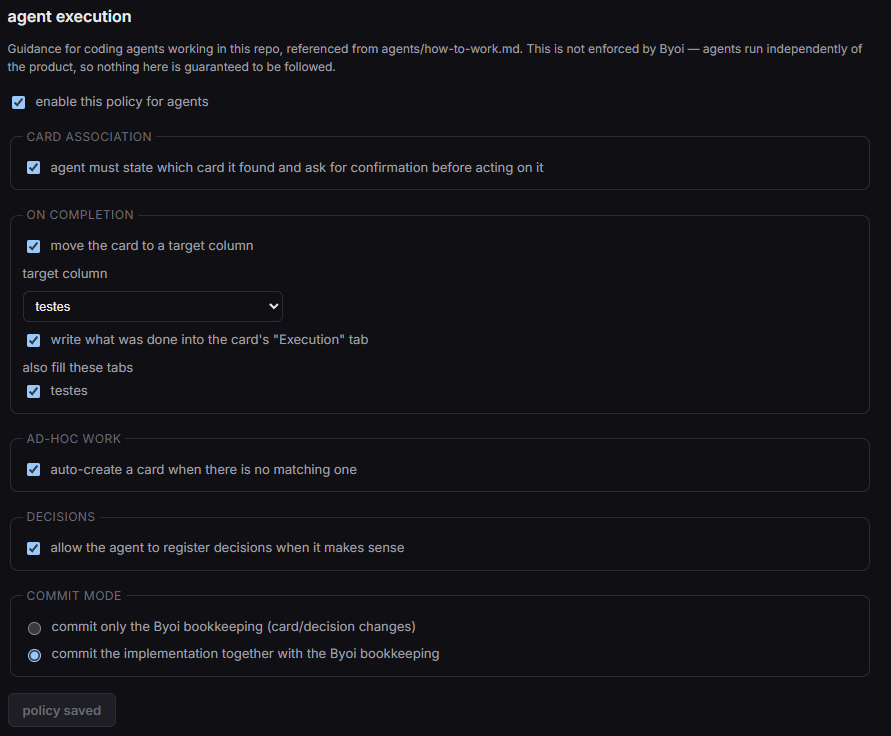
Codex, Claude Code, Cursor or whatever runs in your terminal picks up the card. Your execution policy defines what done means: target column, execution notes, commit mode
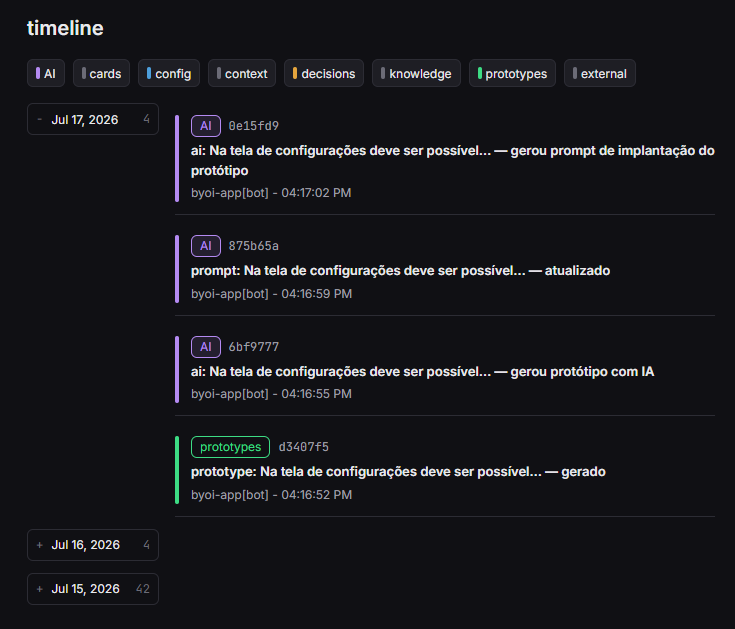
The agent moves the card, writes what it did and can register a decision. The timeline is a view of git log, there is no parallel event system
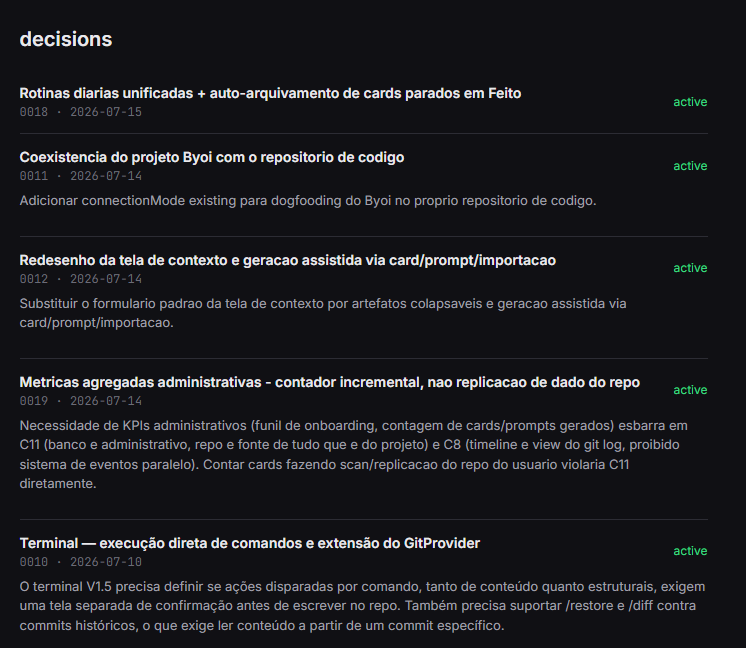
Every decision is a versioned file with an id, a status and the reasoning. New work is checked against active decisions, and a conflict surfaces before the handoff leaves, so a path you rejected stays rejected
Prototype and tests are not built-in stages of Byoi. They are two tabs this project chose to have. The board, the card types, the tabs and the collections live in byoi.config.json, versioned like everything else
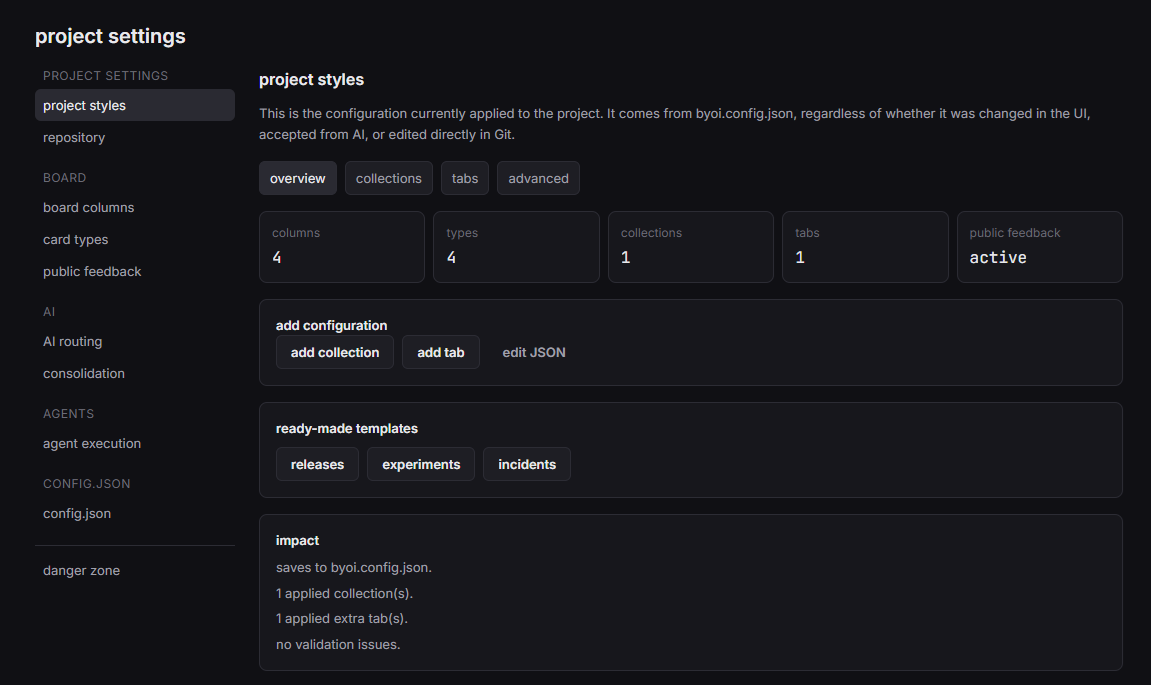
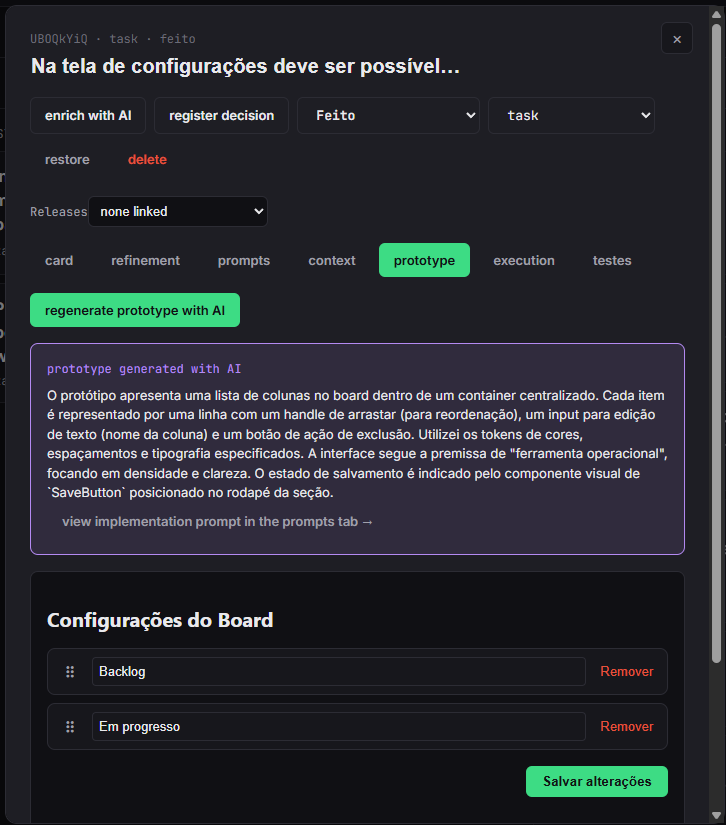
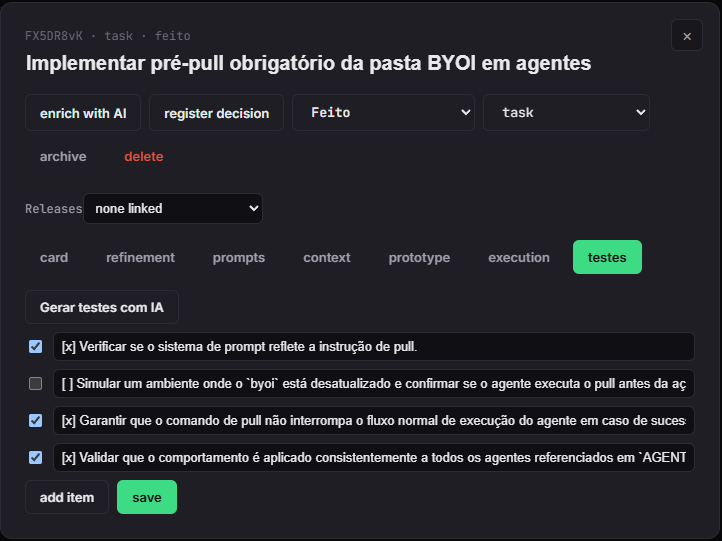
Cards, decisions and rules consolidate into versioned context: project, architecture, hard rules, design system, spirit. Agents read them straight from the repo because they are just files
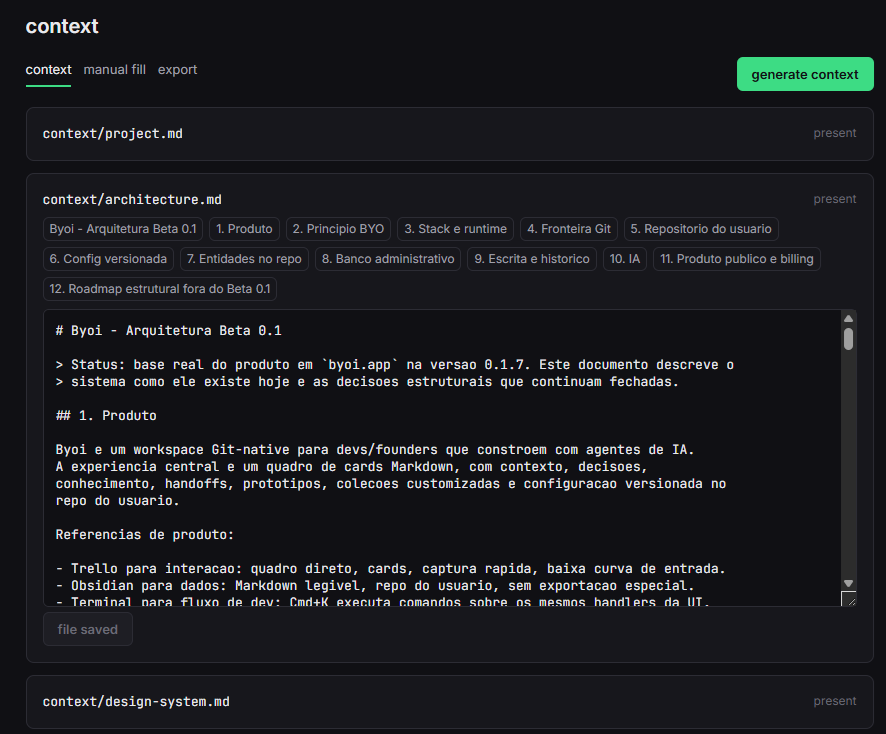
A Claude Project reading your repo folder starts every conversation already knowing the decisions and constraints. The files that brief your coding agents brief your thinking too
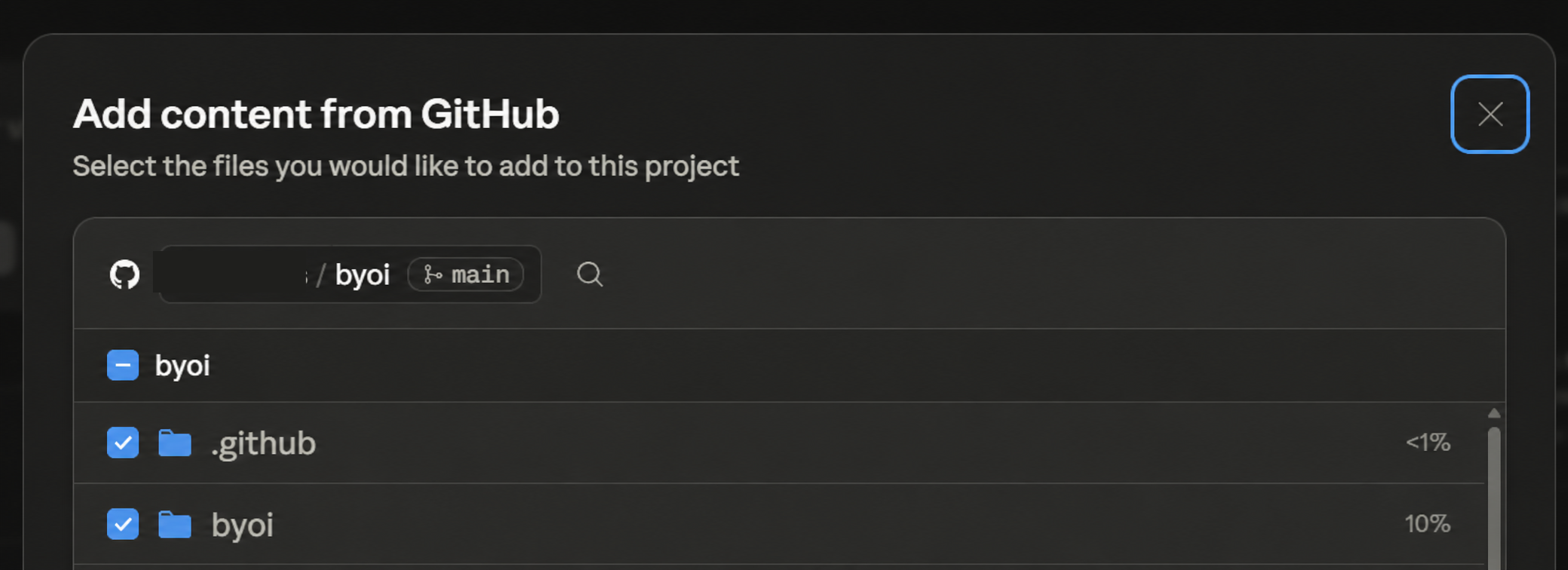
Everything Byoi manages is Markdown and JSON inside your repository. Open the repo without Byoi and it still makes sense
If one chat solves it, you do not need a board. Byoi pays off when the context is worth keeping
Every product screen on this page is the byoi repo managed on Byoi: real cards, real decisions, real gate. Some content is in Portuguese because these screens show the product in daily use, not a staged demo. The format you would live in is the one we live in
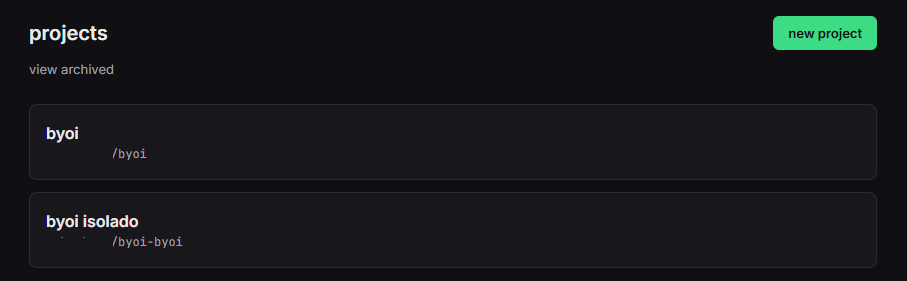
100% free, no credit card, your Git and your AI keys. If Byoi is not for you, your repo keeps every file anyway